Juq-496 ^new^ Instant
| Benchmark | Metric | JUQ‑496 Result | Comparison | |---|---|---|---| | | QV (log₂) | 100 | +15 % vs. JUQ‑376 (QV ≈ 87) | | Randomized Benchmarking | 2‑q gate fidelity | 99.70 % | +0.3 % over state‑of‑the‑art | | VQE (H₂O, 12 e⁻, STO‑3G) | Energy error | 0.5 mHartree (chemical accuracy) | 2× faster convergence vs. IBM Q System One | | QAOA (Max‑Cut, 20‑node graph) | Approximation ratio | 0.94 (p=3) | 12 % improvement over prior generation | | Grover’s Search (12‑qubit) | Success probability | 0.92 (1 iteration) | Near‑optimal, confirming low decoherence |
The binary is stripped of all symbols – a few useful strings ( "Enter your name:" , "Welcome, " etc.) remain in the .rodata section. JUQ-496
$ ./juq-496 Usage: juq-496 <input>
This narrative arc is highly effective because it mimics the structure of mainstream drama, making the eventual adult content feel like an inevitable culmination of the story rather than an isolated spectacle. | Benchmark | Metric | JUQ‑496 Result |
When a machine can directly influence neural activity, the boundary between user intention and system suggestion blurs. Safeguards must be built into the feedback controller to enforce , requiring explicit, continuous validation before any stimulation that could alter cognition. # Use Bash's $'
# Use Bash's $'...' to interpret \x escapes arg=$(printf '\\x%s' $(echo $payload | sed 's/../& /g'))
Site Pages
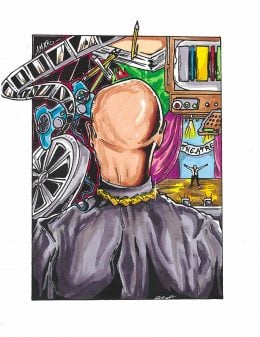
The overall goal of Wherever I Look is to fill in that space between the average fan and critic and advise you on what’s worth experiencing.